JUKI red and navy industrial sewing technology wordmark
JUKI industrial sewing cell operating in an apparel production workshop

SEAM ENGINEERING BEFORE MACHINE SELECTION

JUKI Industrial Sewing Starts with the Actual Material and Seam

Map stitch formation, feed behavior, operator motion and service access before narrowing the machine family. Published model specifications remain the authority for speed, lift, needle system and optional equipment.

GROUPED SPECIFICATION REVIEW

Put operating conditions beside the model sheet

The values below are decision fields, not universal JUKI performance claims. Confirm the current model manual and accessory list for the destination market.

Seam formation

Stitch class
Lockstitch, overedge, coverstitch or programmed pattern
Thread package
Material, ticket size, finish and color-change needs
Needle system
Confirm by exact head and application specification

Material transport

Feed method
Drop, differential, needle, walking-foot or synchronized feed
Stack behavior
Record ply count, compressibility and surface friction
Handling envelope
Document seam radius, panel size and fixture clearance

Production integration

Utilities
Verify voltage, phase, air demand and extraction locally
Automation
Define trimming, backtack, presser-foot and work-clamp sequence
Evidence gate
Approve only after a representative material trial

MACHINE ROUTES

Three production questions organize the first review

Machine families are screened by seam mechanics and handling conditions before procurement teams compare model-level options.
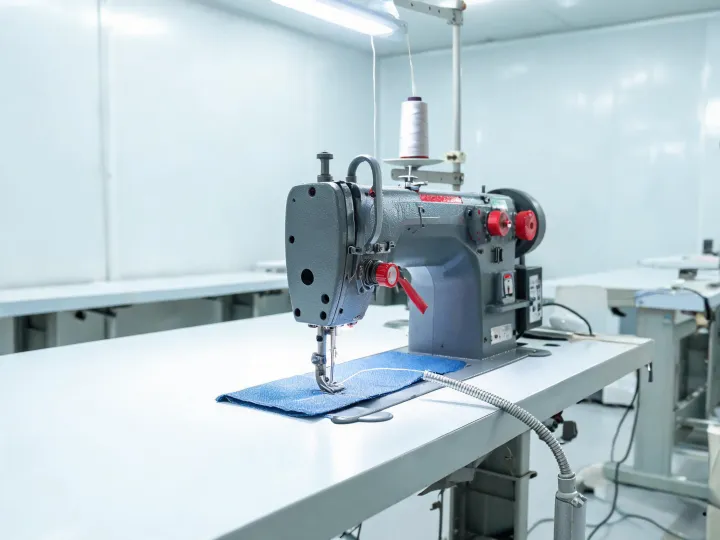
Industrial lockstitch sewing station with fabric under the needle

Construction Sewing

Review straight seams, topstitch quality, reverse sequence and feed consistency on the intended fabric stack.

Open Sewing Machines →
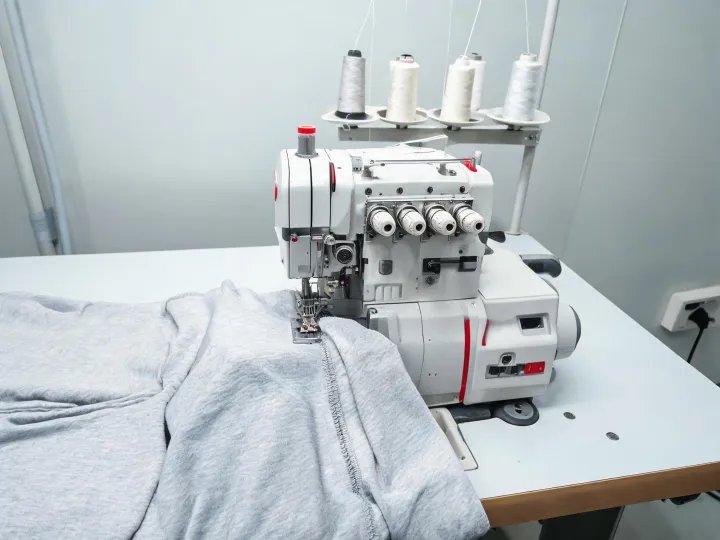
Industrial overlock workstation handling knit garment panels

Edge and Knit Operations

Balance differential feed, seam elasticity, trimming width and operator presentation for the actual knit construction.

Plan a Material Trial →
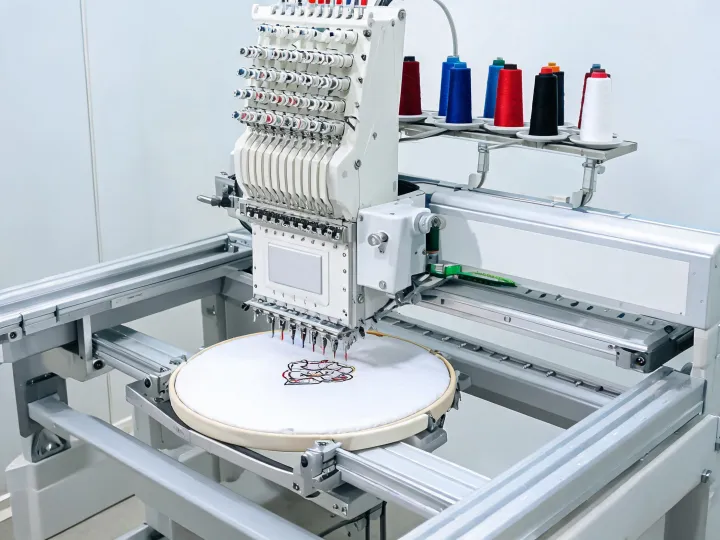
Multi-needle embroidery machine stitching a controlled sample

Embroidery Workflow

Connect digitizing choices, hooping, thread path, color sequence and approval samples to the selected embroidery configuration.

Review Digital Control →

MACHINE + INFORMATION FLOW

Use production data to make setup changes traceable

A digital workflow is valuable when revision status, operator instruction and maintenance evidence remain tied to the exact machine and seam operation.

01

Controlled setup record

Capture material lot, needle, thread, feed settings, folder or gauge and approved sample reference.

02

Exception review

Separate machine condition, consumable variation, operator method and material change before adjusting the standard.

Application engineer reviewing needle area and seam sample at a sewing station

VERIFICATION POINTS

What a useful machine trial must record

  1. Representative stackUse production fabric, reinforcement, adhesive, piping and thread rather than a convenient substitute.
  2. Observed seam resultRecord stitch balance, puckering, skipped stitches, edge behavior and appearance on both faces.
  3. Handling sequenceCount turns, re-grips, alignment checks and interventions around the real operation.
  4. Maintenance accessConfirm cleaning points, lubrication instructions, consumables and technician access for the exact model.
  5. Approval boundaryKeep results attached to the tested material, settings and optional equipment; do not transfer them automatically.
Industrial sewing line planning table with seam samples and machine documents

START WITH EVIDENCE

Send one seam operation, not a generic machine request.

Include material stack, stitch appearance, target output, operator method, utilities, destination market and the date a representative trial is required.